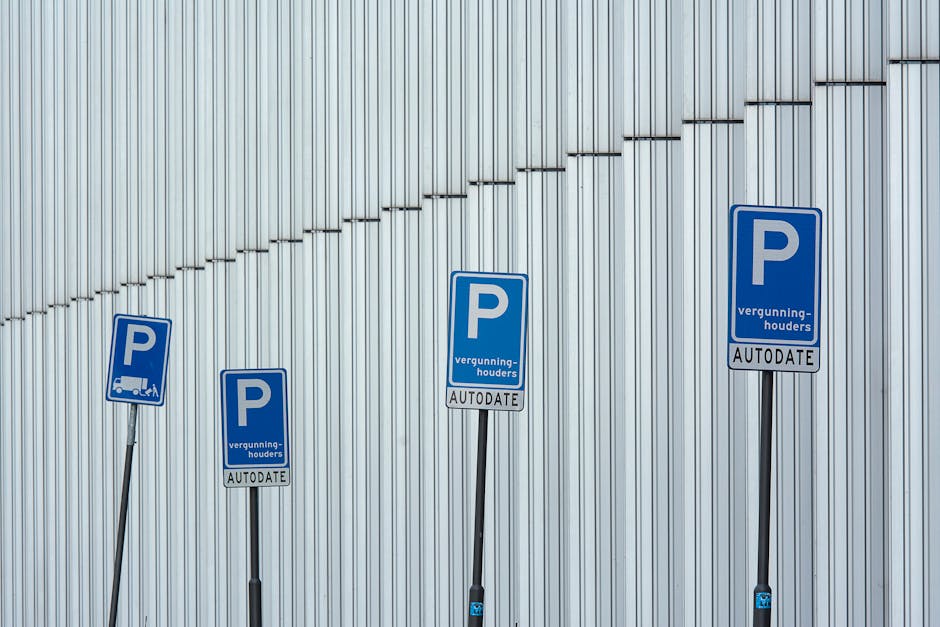
Do Sudbury moves need permits or parking suspensions?

If you are planning a move in Sudbury, one of the first practical questions is not about boxes or tape. It is: do Sudbury moves need permits or parking suspensions? The short answer is that they sometimes do, depending on where the vehicle will stop, how long it will be there, and whether the loading space affects other road users. In a quiet cul-de-sac, you may be fine with sensible parking and a bit of planning. On a tight town-centre street, things can get more complicated very quickly.
This guide breaks the topic down in plain English. You will learn when permissions are usually needed, how parking suspensions differ from permits, what makes a street high-risk for delays, and how to avoid last-minute headaches on moving day. If you are coordinating a house move, flat move, or a same-day job, a little preparation can save a surprising amount of stress. And, truth be told, parking is often the bit that catches people out.
Why Do Sudbury moves need permits or parking suspensions? Matters
Moving day is already full of moving parts: keys, boxes, furniture, timing, and the one person who always seems to need the kettle packed last. Parking may sound minor, but in reality it can shape the entire day. If the van cannot park close to the property, every item takes longer to carry. That means more labour, more back-and-forth trips, and more chance of bumping furniture, scuffing walls, or blocking a lane.
In Sudbury, some streets are straightforward and others are awkward in exactly the ways that matter for removals. Narrow roads, limited kerb space, resident-only parking, yellow lines, school-time restrictions, and busy junctions can all turn a simple load-in into a slow shuffle. On a wet morning, with neighbours trying to get past and a sofa in the doorway, you really feel it.
That is why the permit question matters. A permit or parking suspension is not just a box-ticking exercise. It helps you control access, reduce risk, and keep the move on schedule. It can also be the difference between a calm handover and a panicked phone call at 8:15 a.m. asking where the van can legally stop.
For some moves, no special permission is needed at all. For others, a small bit of advance planning prevents fines, complaints, or a moving team having to carry heavy items from halfway down the road. If your move involves a tight street, you may also find our guide to parking and loading tips for Friars Street useful, because it shows how quickly access issues can become the real story of the day.
How Do Sudbury moves need permits or parking suspensions? Works
Let's keep this simple. In moving terms, there are usually three things people mean when they ask about permissions:
- General parking permission - whether the vehicle can legally stop near the property.
- Suspension of a parking bay - where a reserved or controlled parking space is temporarily taken out of use for your move.
- Loading or unloading allowance - whether you can stop briefly for active loading, even if long-term parking is not allowed.
These are not the same thing. A parking suspension is usually the more formal option and is often used when you need to keep a bay clear for a specific vehicle on a specific day. A permit might relate to resident parking, visitor parking, contractor access, or another local arrangement. Loading rules can be more flexible, but they are not a free pass. If you leave the vehicle unattended for too long, or you block traffic, you may run into trouble.
In practical terms, here is how it tends to work on moving day:
- You assess the street and the type of vehicle you will use.
- You check whether the property has off-street parking, shared access, or only roadside space.
- You decide whether the van can safely park close enough for loading.
- If not, you consider a permit, a bay suspension, or an alternative loading plan.
- You build in a time buffer, because access problems always take longer than expected. Always.
For some addresses, especially around tighter town routes and older streets, planning access in advance is as important as choosing the right packing materials. If you are still at the stage of getting organised, packing smartly for a smoother move can help you avoid turning a parking issue into a whole-day delay.
A useful way to think about it is this: a parking suspension is about reserving space; a permit is about authorisation; loading is about temporary access. The details vary, so always treat the street itself as part of the move plan, not as background scenery.
Key Benefits and Practical Advantages
People usually only think about permits when something goes wrong. That is a shame, because getting the parking side right gives you real, practical wins before a single box is lifted.
Faster loading and unloading. The nearer the van is to the door, the fewer steps every item takes. That sounds obvious, but the effect on timing is huge, especially for heavier items like wardrobes, mattresses, white goods, or awkward furniture.
Lower risk of damage. Shorter carry distances mean fewer chances to snag a wall corner, chip a frame, or drop an item on wet paving. You feel the difference with bulky things particularly. If your move includes a heavy item, it may be worth reading solo strategies for safely lifting heavy items before you start improvising with your back.
Less stress for everyone. A move can become tense when the team has to hunt for legal parking while the clock is ticking. Clear access plans cut down on that frantic, last-minute energy.
Better neighbour relations. Nobody enjoys a van wedged across a dropped kerb or blocking bins, driveways, or the school run. Good planning shows respect for the street, and that matters.
More predictable pricing. If the move takes longer because the van has to park further away, the labour time can increase. That is especially relevant if you are working to a fixed schedule or a same-day plan. Our page on avoiding bulky-item surcharges in Sudbury removals also shows how small access problems can become bigger cost problems if they are not flagged early.
Expert summary: If the van can park legally and safely close to the property, you may not need a formal permit or suspension. If access is restricted, short-stay loading is uncertain, or the road is controlled, plan for permission early rather than hoping for the best.
Who This Is For and When It Makes Sense
This issue is not just for large house removals. In fact, the people who often need parking planning the most are the ones who assume their move will be straightforward.
Home movers in terraced or town-centre streets usually need to think about access first. If the road is narrow, busy, or lined with parked cars, the van may not get close enough without a plan.
Flat movers often need to coordinate shared entrances, limited stopping space, stair access, and tighter time windows. For those moves, our flat removals Sudbury page is a helpful companion resource.
House movers with heavier loads or larger furniture may need more time and space than they first expect. If you are moving a full household, house removals in Sudbury often benefit from a more detailed access check than a simple postcode lookup.
Students and renters tend to underestimate parking issues because they are moving fewer items. But student lets can still be awkward, especially with stairwells, shared roads, and limited stopping areas. The student removals Sudbury page is a good reference point if you are moving between small properties or halls.
Office movers may need permissions even more often than domestic customers, particularly where there are loading restrictions, building access rules, or deliveries shared with other businesses. For that kind of move, office removals Sudbury can be a better fit than trying to improvise on the day.
And if you are in a hurry? Parking planning becomes even more important. Same-day moves are fine, but they are less forgiving. A quick look at same-day van options for last-minute removals can help you see why access and timing need to work together.
Step-by-Step Guidance
Here is a sensible way to handle the permit and parking question without overcomplicating it.
- Inspect the street in daylight. Look at road width, kerbs, bends, bay markings, and how many parked cars are usually present. An empty 10 a.m. street can look very different at 4 p.m.
- Measure the practical loading distance. You do not need surveyor-level precision, but you should know whether the van can stop close enough for easy carry distance.
- Check for restrictions. Look for yellow lines, resident bays, loading-only spaces, time limits, or access controls.
- Decide whether formal permission is needed. If you need to reserve space, use a controlled bay, or block a restricted section for loading, a permit or suspension may be the safer route.
- Build the move around the access reality. Do not plan a large sofa extraction as though the van will sit right outside the front door if it plainly cannot.
- Prepare the property. Clear hallways, remove loose clutter, and keep the front path open. If you want practical prep advice, efficient decluttering before leaving home is worth a look.
- Protect the heavy or awkward items. Mattresses, beds, appliances, and bulky furniture are easier to move when they are packed and wrapped properly. The quick-start guide to moving your bed and mattress is especially useful if you want to avoid a floppy, last-minute scramble.
- Have a backup plan. If the closest space is taken, know where the van can legally wait without causing chaos.
One thing many people forget: a parking plan should also include the return trip. If the van is loaded and needs to be re-parked for the second load, make sure the rules still work later in the day.
Expert Tips for Better Results
Here is where small, practical judgement makes a big difference. These are the things that often separate a smooth move from a frustrating one.
Book access planning before you book the van. It is tempting to assume the vehicle size is the main issue. Often it is not. Access matters just as much. On some roads, a slightly smaller van can save an entire day of manoeuvring.
Choose the van to suit the street. If your road is tight or lined with awkward bends, larger is not always better. A more manageable vehicle can be the smarter call. We cover this in more detail in our guide to narrow lanes in Sudbury estates.
Protect loading time at the front end. In busy areas, the first ten minutes can decide the whole job. Get the van positioned, doors ready, and route to the front door clear before you start bringing things out.
Use the right packing sequence. Items you want off the van first should be loaded last, not buried. It sounds simple. People still get it wrong, though. Human nature, I suppose.
Plan around weather and surfaces. Wet steps, icy driveways, and loose gravel slow everything down. They also make lifting more tiring. A short carry in drizzle can feel oddly exhausting by mid-morning.
Watch for kerbs and verge edges. Rural and edge-of-town locations can have their own access quirks. For example, if your move involves roadside stopping or grassy edges, the article on local council rules for verge and kerbside removals gives useful context.
Keep communication open. If you are using a removal team, tell them in advance about any restricted bay, narrow lane, or shared access point. A two-minute conversation can prevent a forty-minute delay. No exaggeration.
Common Mistakes to Avoid
These are the errors that turn up again and again. None of them are dramatic on their own. Together, they can make a move feel like a mess.
- Assuming parking is "probably fine." Probably is not a plan.
- Leaving permit checks until the day before. If a suspension or local approval is needed, you may not have much time.
- Choosing the wrong van size for the street. A huge van that cannot park safely is worse than a slightly smaller one that can.
- Forgetting about other vehicles. Neighbours, deliveries, and passing traffic can change access within minutes.
- Blocking the road without thinking it through. Even a short block can cause friction, and sometimes complaints.
- Ignoring loading time. One sofa, one fridge, one awkward stair turn - and suddenly the van is not "just stopping quickly" anymore.
- Not planning for where items will be staged. If boxes pile up on the pavement or garden path, the job slows down fast.
A classic mistake is treating parking and moving as two separate tasks. They are not. They are joined at the hip. If parking goes wrong, everything else is harder.
Tools, Resources and Recommendations
You do not need a complicated toolkit to answer the permit question, but a few simple things help a lot.
- A phone camera to photograph the street, bay markings, and potential loading points.
- A tape measure for doorway widths, hallway pinch points, and the van-to-door carry distance.
- Simple floor protection like cardboard or covers if items are being moved in and out repeatedly.
- Labels and room notes so boxes come off in a sensible order.
- A loading plan that identifies the heaviest items first, especially if stairs or bends are involved.
For packing and staging, packing and boxes in Sudbury is a useful resource if you are still gathering materials or organising box counts.
If you are trying to decide whether professional support is the right call, the services overview gives a broad sense of the moving options available, while man and van Sudbury is often suitable for smaller, access-sensitive jobs. For larger or more layered moves, it may make sense to compare that with removal services Sudbury or removal companies Sudbury depending on how much support you want.
Law, Compliance, Standards, or Best Practice
Because parking permissions and suspensions can involve local authority rules, it is best to treat them as a compliance issue as well as a convenience issue. The exact process can vary by location and by street type, so do not assume one move works the same as another. A resident bay, a limited waiting bay, a loading bay, and a private drive each bring different expectations.
In plain terms, best practice is to:
- check whether parking restrictions apply at the time of your move;
- allow enough notice for any required suspension or booking process;
- avoid blocking access for emergency vehicles, neighbours, or deliveries;
- keep the vehicle positioned safely and lawfully at all times;
- tell your moving team about anything that could change the plan.
It also helps to think in terms of safety and duty of care. A move that is legal but chaotic is still a poor move. If heavy lifting is involved, pair parking planning with sensible manual handling. The pages on health and safety policy and insurance and safety can be helpful when you want to understand the broader standards behind careful removals.
If you are moving a fragile or valuable item, planning becomes even more important. For example, piano moves and antique furniture often need more space, more time, and more controlled loading. That is why the articles on DIY piano moving and moving antiques safely are useful reading when the load is not standard.
Best practice, really, is simple: do not leave access to chance.
Options, Methods, or Comparison Table
Here is a straightforward comparison of the main ways people handle access on moving day.
| Option | Best for | Pros | Watch-outs |
|---|---|---|---|
| Standard roadside loading | Quiet streets, short moves, easy kerb access | Simple, fast, often no formal step needed | Not suitable where parking is restricted or space is tight |
| Parking permit | Areas with controlled or resident parking | Helps ensure legal stopping space | May still require careful timing and can be limited in scope |
| Parking suspension | Moving where a bay needs to stay clear for the van | Protects a loading space for the agreed time | Usually needs advance planning and may not suit short-notice moves |
| Smaller van and shuttle loading | Narrow roads or awkward access | More flexible in tight spaces | Extra handling time if the vehicle cannot get close enough |
If you are comparing move types, flat and office jobs tend to need more access planning than a simple single-room relocation. The right choice depends on the street, the vehicle, and how much time you have. Not glamorous, perhaps, but very real.
Case Study or Real-World Example
Imagine a couple moving out of a top-floor flat in central Sudbury on a Friday morning. They have a sofa, a bed, a washing machine, and the usual mountain of boxes that somehow multiplies overnight. At first, they assume the van can stop directly outside. Then they notice resident bays, a narrow carriageway, and a couple of regular parked cars already in place by breakfast.
If they arrive without a plan, the team might have to park further away and shuttle items in stages. That would mean more walking, more time, and more chances for an awkward scrape on a stair rail. If they had checked access earlier, they could have planned a loading bay, a suitable time window, or a smaller vehicle better suited to the street.
In a slightly different move, a family on the edge of town may have driveway space but a tight corner at the entrance. In that case, a formal parking suspension may not be necessary at all. What matters more is making sure the van can turn in, stop safely, and load without blocking the road. Same topic, different answer. That is why a one-size-fits-all rule does not really work here.
We have seen this with last-minute jobs too. A customer may ring on a Thursday evening, worried that nothing is sorted. Once the access point is checked and the van size is matched to the road, the whole move suddenly feels manageable again. It is odd how often the parking piece is the thing that restores calm.
Practical Checklist
Use this before move day, ideally a few days in advance if possible.
- Confirm the moving date and time window.
- Check whether the street has resident, loading, or restricted parking.
- Decide if a permit or parking suspension is likely to be needed.
- Identify the safest place for the van to stop.
- Measure the carry distance from van to door.
- Make sure stairs, hallways, and entrances are clear.
- Set aside the biggest and most awkward items for easy access.
- Warn neighbours if the road will be busy or access may be tight.
- Prepare a backup parking plan in case the first spot is taken.
- Keep the phone charged and available on the day.
If you are still at the stage of deciding whether to store items, move them, or split the job over two days, storage in Sudbury can sometimes make the parking side far easier. Fewer items in one trip usually means less pressure on access too.
And if your move is heavily furniture-based, furniture removals Sudbury is worth considering when you want the heavier, awkward items handled with less hassle.
Get a free quote today and see how much you can save.
Conclusion
So, do Sudbury moves need permits or parking suspensions? Sometimes yes, sometimes no. The real answer depends on the street, the time of day, the kind of parking available, and how close the van needs to get to the property. If access is easy, you may not need anything formal. If the street is controlled, narrow, or busy, it is wise to treat parking as part of the move plan from the start.
The safest approach is simple: check access early, plan for restrictions, and match the vehicle to the reality on the ground. That saves time, reduces stress, and makes the whole day feel less like a scramble. Which, let's face it, is exactly what you want when there are boxes everywhere and somebody is asking where the tea bags went.
With a bit of forethought, parking becomes just another job to tick off, not the thing that derails everything else. And that small bit of calm can make the whole move feel a lot more human.
Frequently Asked Questions
Do Sudbury moves need permits or parking suspensions every time?
No. Many moves do not need formal permission if there is safe, legal loading space close to the property. The need usually depends on local restrictions, bay controls, and how much space the van needs.
What is the difference between a permit and a parking suspension?
A permit usually allows certain parking or access under specific conditions, while a suspension temporarily removes a parking bay from normal use. In practice, suspensions are often used to keep a loading space clear for a move.
How do I know if my street in Sudbury needs special parking arrangements?
Look for controlled bays, resident-only signs, yellow lines, time limits, and narrow road widths. If the van cannot stop close enough without causing a problem, it is wise to assume extra planning may be needed.
Can a removal van stop on yellow lines for loading?
Sometimes brief loading may be tolerated in certain places, but it is not something to rely on casually. Rules vary, and stopping must still be safe, legal, and genuinely for active loading.
How far in advance should I sort parking for a move?
As early as you reasonably can. For simple moves, a few days may be enough. For busy streets, controlled parking, or same-day moves, earlier planning is much better.
What happens if I do not arrange parking and the van cannot stop nearby?
The move usually takes longer, labour becomes harder, and there is more chance of delays or damage. In some cases, you may also face parking issues or complaints from neighbours.
Are parking suspensions worth it for a small flat move?
Often yes, if the street is tight or the bay is regularly occupied. Even a small move can become difficult when every box has to be carried a long way. It depends more on access than on property size alone.
Do student moves in Sudbury need the same parking planning as house moves?
Not always, but they still benefit from it. Student moves can involve narrow streets, shared entrances, and awkward loading areas, especially around flats and shared houses.
What should I tell my removal team before moving day?
Tell them about road restrictions, resident bays, narrow lanes, awkward corners, shared drives, and any likely access problems. The more they know in advance, the smoother the day usually goes.
Can a smaller van help if parking is limited?
Yes, in many cases. A smaller van can be easier to position on narrow streets and may reduce the need for complicated parking arrangements. The trade-off is that you may need more trips or better loading discipline.
Is it better to use storage if access is difficult?
It can be. Breaking a move into stages can reduce pressure on parking, loading time, and vehicle size. If you are juggling dates or access restrictions, storage may make the whole process much easier.
What is the biggest mistake people make with move-day parking?
Assuming it will sort itself out. Parking and access are often the hidden weak point in a move, and they are much easier to solve before move day than during it.